Apropos the USA’s recent intervention in Venezuela, an extract from a book of mine: Ade, the Flying Paintbrush
On the lagoon a slim woman canoed downstream, bare breasts swinging back and forth like accessory paddles with each languid stroke she made.
Ade turned left on to the concrete path to find Professor Aloja eating a biscuit in front of a weather-beaten cabin beside the lagoon. She was wearing a magnolia ankle-length gown. Curls of thick grey hair peeked from under her yellow headgear. ‘A country that does not value its past is a ship without a compass,’ said the board above her head. Someone had crossed out ship and replaced it with sheep.
‘From where?’ she said.
Ade bowed and turned his head a fraction away as he handed her the note he got from Niari’s friend. A nervous jab at his glasses caught the tip of his nose. ‘I brought this for the professor. A friend of my late grandmother sent me. Name, Niari and she records oriki for Lagos families.’
‘Niari? The singer?’ she said with lashings of irony. She took another bite out of her biscuit. ‘Forgive me my stomach has the temperament of a neonate,’ she said, in a costly accent not dissimilar to Bola’s.
Ade cleared his throat and imparted the correct level of gravitas to his tone. ‘Where can I find the prof please because I am trying to claim ancestral land?’ Nervousness and a gust of tangy air made him sneeze.
‘We’ve met,’ she said, with a suspicious stare.
‘I am not sure that is so, ma.’
‘Don’t act innocent. We’ve met.’
Ade puffed his cheeks. Had she recognised him as the callow man, the foreigner who rebuked her for rudeness at Chief’s party months earlier in June? She eyed him that night with an air of bemusement, as though he was a monkey playing a Beethoven Sonata then asked her friend, in Yoruba, what Yeni was doing with this foreigner instead of one of their omoluwabis. Already wound up to the base of his gluteals by similar comments that evening Ade retorted in perfect Yoruba. They have amiable boys where he came from too. The professor’s mouth dropped open. ‘Didn’t know, did not mean, I did not mean to offend. I have many friends from…’
‘Didn’t mean what you said, or didn’t mean me to get it?’ he’d said and wheeled away from the stammering professor, faded into the crowds and avoided her for the rest of the evening.
‘Have we met or not?’ asked the professor breaking another biscuit.
Professor Aloja’s aggressive grunt disconcerted Ade further. She held the note at arm’s length with her fingertips, slicing Ade with her eyes at intervals as she read, then as she folded the paper once more her face glowed in a continental smile. ‘Ah, why didn’t you say that you are from Lai, instead of trembling as though you are a bald gorilla stowaway in Antarctica? Lai and I are like sisters, studied here in this same Akoka.’
‘So you are the prof of history?’ said Ade.
‘Me indeed. My second Ph.D. Thesis was on amputating male expectations,’ she said and with amazing agility slipped her wide feet into a pair of black rubber slippers, swung back then heaved on to her feet.
Ade picked up her glass and hurried indoors after the prof. The smell of her office reminded him of Obe the cobbler’s hut – leathery and earthy. ‘Careful,’ she said and leaned a raffia shield back inside the doorjamb, ducked around a pirogue, under a bunch of manacles to reappear beside stacked shelves. ‘Sit, but I cannot take more than an hour of the heat in this room,’ she said, fanning her face. ‘Your request appears to fall under land tenure in precolonial Lagos. A lot of scallywags write a heap of gross and unengaging domestic product on that topic, that should be closer to the w.c. than the www but you tell me if there is much to choose between the two echoing chambers,’ she said, picking up a bronze bust of a girl reading a book.
‘Iya, my late grandmother claims that her grandfather’s estate was misappropriated or misallocated.’ Ade sat on a rickety stool beside a pile of stirrups.
‘Misallocated? Why the euphemisms? Stealing is stealing. Facts outlive myths. Passions fade. But the truth is simple beneath the florid obfuscations. I thought you were from Zimbabwe.’
‘I am and I am not but it was easier to go along with perceptions,’ he said to galloping foreboding.
‘Dangerous and confusing game, lying, especially to yourself. But now you mention it, self-deception is the cousin of self-belief. They both help us survive?’ She grinned. ‘My boy, stop me stop me before I lose myself in digressions.’ She waved a figurine at Ade’s satchel. ‘What have you got there?’
Ade dipped into his satchel for the broken photo of Jinadu, Iya’s grandfather. ‘I have an old Ayo board as well. The mat is at home, made of commemorative slats I believe.’
The professor inspected the photograph and placed it on the table in front of her. ‘This is of titillating interest. Wait.’ She grunted out of the chair, swung into an adjacent office and returned a few minutes later with a stack of old ledgers. ‘Most of these footnotes I made in my psychopathic handwriting, sitting outside that inspiring door with the lagoon in my ears.’ She pointed at the door just before the wind slammed it shut. Ade got up to wedge the front door open.
‘Inheritance is a bomb field. Or is it a minefield?’ She chomped on a biscuit. ‘Are you paying by the minute or by word count?’
Ade rubbed the ache in his gut. ‘Err, in what language?’
She cocked her head to the right and folded her right wrist over the other, just as Iya did. ‘Only joking. Go on.’
‘Iya, my grandmother lived near Oremi village. According to Iya, her grandfather was called Jinadu. They captured him in battle as a boy or his family driven out during a war. He became a slave to an Idejo family but was so talented that his master helped him set up in business. Jinadu thrived. But after he died Iya and her mother, Jinadu’s first wife, got nothing.’ Ade swallowed the lump in his throat.
‘So who got the property?’
‘I am married into the Martins family that won the case. They have papers establishing the root of title from their grandparent Akakambo who used to work for Jinadu.’
‘So Akakambo was to Jinadu as Jinadu was to his master in a way, though not as master and slave. Akakambo took everything? It is an unusual case, fighting your in-laws for land from under the same roof. Anyway, that is not for now, as far as I am concerned just because they go to court may make it correct procedure and legal but it does not make it right. Many examples in history to back me up, but stop me stop me before I lose myself in digression…’
‘That is what I thought,’ said Ade, his mind racing back to his confrontation with Microchip, the Dean.
Professor shot an angry look at him for interrupting. ‘We know that before your g-squared grandfather’s days power shifted to a great extent from the founder Idejo white cap families to the oba.’ Professor Aloja frowned and stroked her chin. ‘Confusion started after the British wafted gun barrels at Dosunmu in 1861, told him to swallow his bile, gall bladder, duct and stones with only what saliva remained behind his tremulous lips, sign their Treaty or accept the constipation of his liver with lead shot. He signed, and the British said ownership of Lagos land passed to their Crown.’
Ade shook his head. ‘But what did the Idejo families do?’ he said to humour the professor. He knew the answer already.
‘Foul, foul, ole, thief, iro, lies they cried. They said the oba should not have given their land to foreigners, that even before 1472 when that Portuguese sailor Sequeira came across these wetlands and islands and renamed the place Lagos de Curamo, then Lagos, the Yoruba people continued to call it by their name, “Eko or Onim.” Professor stopped to catch her breath. ‘His flexuous backbone reinforced in a fashion by indigenous dissent Dosunmu bounced around and said he didn’t grasp the implications of what he signed. Now in the interest of balance, I must say that the British will claim that they gave him freedom of choice, the gunship was only to hurry him up, catalyse him in his own interest.’
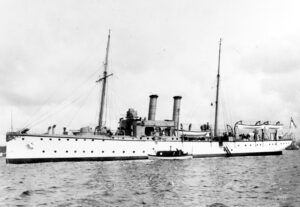
The analogy recalled Controller to mind. ‘The gun served as a pinch of a rare metal does in an inevitable and profitable reaction?’ said Ade.
‘Without nuclear weapons, and I blame our Ifa priests for this, where were they when others were splitting atoms, what choice did Dosunmu have? Fight, flight, suicide, feign madness, intoxication, prayer, juju?’ said the professor, counting off the options on her fingers. She laughed. ‘Maybe the gods of political retribution are showing the British how it feels to sign something they later find they do not fancy. And at Maastricht nobody held a gun to their head. Now, they cannot bully fellow industrial Europeans with gunpowder or opium.’ She crumpled a biscuit wrapping in her hand. ‘If you are weak weep and sign because you have to, but never forget,’ she said in a wistful tone. ‘But to return to the matter at hand, here in Lagos excrement defaced those pristine white colonial fans when the savvy, the freed slaves from Brazil and Sierra Leone petitioned. In response, the colonial officials came up with Ordnance no 9 of 1863. Three officers sat once a week for a year to look into claims. They asked the administrator to issue -’
‘Crown grants,’ said Ade. ‘Did that solve the problem?’ he said.
Her features darkened at the interruption. She popped a biscuit into her mouth and followed it with a sip of her drink. ‘How old are you?’ she said.
‘Twenty four.’
She brightened. ‘Ah, a year younger than my son, that’s why you think you know it all,’ she said with a chortle. ‘Ok, what do you think happened?’ she said and folded her arms.
A sudden funk of scalding hatred for this professor’s son, a man he had never met, for having such an accomplished mother, engulfed Ade. Unwilling to sound a brat or penke, he let her repeat the question. ‘What happened? I am not so sure, ma. They did not have enough grants?’
She nodded and tapped crumbs off her lips. ‘Glover, the chief administrator, encouraged his clients to apply and of course they got preferential treatment.’
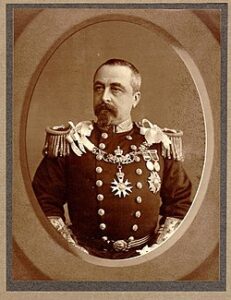
Governor John Hawley Glover
‘Is it not only natural?’ said Ade, to provoke another digression.
‘A large number got grants because they had squatted in a place without disturbance for three years. But wait a minute said the chiefs. Why did they have to apply for ownership of their own land? They will be asking us to apply to look out of our own two eyes, to open our mouths to eat, or when to connect our lower bowels to the world. Even Sango the god of Iron did not ask that of us. Many locals ignored the colonial officers and continued to grant land in their own right. We call them omo oniles, owner-managers of the soil, or land.’
‘Was that good?’ said Ade.
She shook her head and tapped crumbs from her lips. ‘It poured mud on a thick morass, especially when those who got land as worthy immigrants or former servants or slaves sold land they did not register.’ Professor Aloja beamed. ‘So Martins may have won their case but as far as I am concerned, is it still not based on the word of man and I mean man and the size and depth and extent of his networks?’ She rocked from side to side. ‘And natural artefacts can be more reliable. They don’t kill each other or lie for example they used-’
‘Was that why Iya insisted on keeping the wooden mattress?’
‘Have you come to learn or to lecture?’ she said.
‘Sorry, ma.’
‘Who dictates history? And who records it? Often the same people. Powerful people. Never forget that.’ Professor Aloja leaned over to read the spines of the books. ‘This one, early 20th century is a good start,’ she said, pulling a black album out of the middle of the pile. Sheets of paper cascaded to the floor. Ade held his breath against the dust for as long as he could but the professor seemed unperturbed. ‘We collect and keep everything here, certificates, newspaper cuttings, stamps, postage, and official, but be careful, the paper is as delicate as my ego in the morning mirror.’
Ade pulled the stool up to the desk and leafed through the flimsy pages of the album. Professor Aloja hovered over him like a mother over her baby in the hands of a tipsy relative. ‘What’s he doing on a white horse?’ said Ade. The photo of his great-great-grandfather on that splendid horse swelled his heart with wistful pride.
Professor Aloja tapped his wrists. ‘Don’t do that. Lie it flat,’ she said. ‘Sorry, fire away. Ah, that is ceremonial, the helmet and plumes and feathers. Your g-squared g-father must have known the officials. From what I’ve seen and what you told me, not a man to die intestate.’
‘But people change their minds.’
‘And sometimes they don’t.’ She gave Ade a malty biscuit. ‘Aren’t you going to compliment me? Baked them myself.’ She lifted the pieces of Iya’s precious photograph out of the padding. ‘It’s broken. You didn’t do this I hope?’ she said, in a condemnatory tone.
‘My grandmother dropped it during an emergency. You cannot imagine how sad she was when she found it like this,’ said Ade, struggling to keep his composure.
‘Hey, what is this, oh?’ she said and teased open the folds of a card that fell from the back of the photograph. ‘Interesting, very interesting indeed, and I have to say that could be one of the understatements of my career. Can I keep this for a few days?’