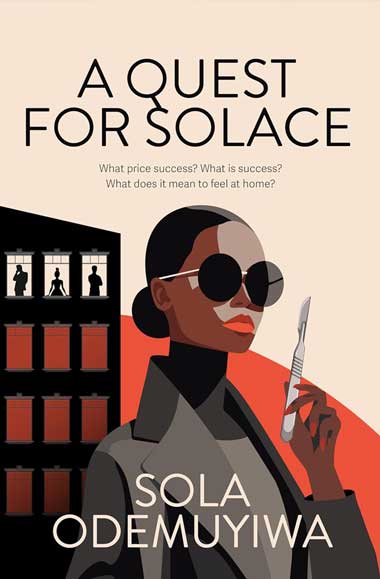
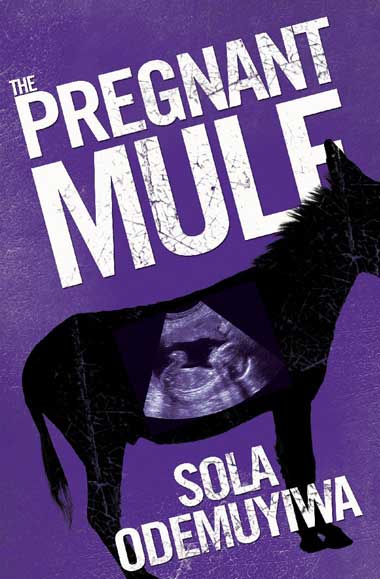
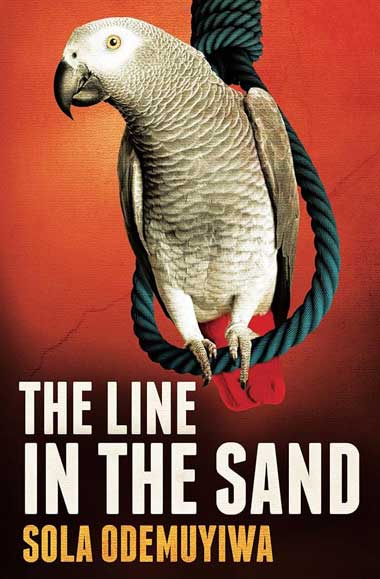
A fictional Biafran war veteran writes his fictional memoir during his anxious wait in the week before his grandson is born.
…The war had ended a few years earlier in 1970. Gowon commanded us to forget the battlefield calamities, the return matches, the massacres. Oil was flowing. We should rejoice in the jostle of your petronaira for parity with the colonial sterling. We had so much money we didn’t know what to do with it. Illegal immigration was for others. Nigerians in a boat in the back of a van? “Na lie. Big lie like a three legged table from MFI,” went the rhyme. Immigration officers waved my holidaying classmates through Heathrow. Why would they want to slum it in the sick man of Europe?
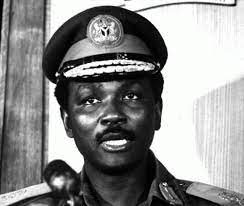
After 8 years at the top table, Gowon changed his mind about stepping down in 1976 as promised. We suckers could take it or leave it and hold our horses and noses, because though his regime stunk to the high heavens and locked up or humiliated those who dare to cross them, or, to continue the local cloacal metaphors, though they may have allowed the flies to land on them where they squatted too long to shit, tough. But you promised, cried the civilian leaders. Do your worst the junta replied. We have guns. What have you got except loudmouths?
Alas, unlike Thatcher in Britain years later, Gowon did not have the late BBC’s esteemed John Cole’s “men in grey suits,” to tell him that the game was up. Nor did the army borrow a leaf from the Oyo Mesi who had the power to depose an unsuccessful Alaafin of Oyo by hinting that he should commit suicide. In one sense Gowon was right. Only guns could dislodge him. On Tuesday the 29th of July, they did. Yes, the 29th day of the month again. My backpassage was still smarting after passing a pair of wriggling foot long worms and I vowed never again to buy that boy’s suya when crackly marital music intruded from a transistor radio outside. Seconds later I heard loud knocking on my door.
‘Yaro, are you there? Your friend, Gowon, is gone, coup.’
I opened the door to a group of excited students. ‘Don’t call him my friend, my friend.’ A variation of the don’t call me your my friend.
A triumphant Seyi shot out of his room next door and shook his clenched fists in front of a my face. ‘This is what this country is praying for…a no nonsense man.’

‘Really?’ When I learned the name of the new head I almost threw up. The cheers reverberating around the campus felt like daggers to my eardrums. Was this not the same man credited with the “return matches?” The man whose great leadership I’d witnessed in Asaba? Making him head of government was like installing serial killer Harold Shipman (look him up) as the Chief Medical Officer, the President of the Royal Colleges and the Chair of the GMC all at the same time. Then handing him crates of morphine and syringes with the the keys to the care of the elderly facilities. It would not end well, but, as Beko advised, I was determined to keep my head down. One slip in the next exam and I was out. Remember, petty, that I was repeating the class.
Soon after the coup, nominations opened for the annual elections to the executive board of our Medical Students’ Association. By custom the 3rd Year students ran for office, provided the Executive team for a year and moved on. Yet Seyi, who was now in the 4th Year announced that he was going to run for President again and if he won, wanted to change the constitution so that he could run again if necessary. What he proposed was unprecedented and an affront to the spirit and letter of our constitution.
I met Seyi in our corridor one evening shortly after his nomination. In spanking tennis whites, he practised a tennis forehand. His gold watch glinted under the lights. ‘Yaro they say you are not happy that I am unopposed. What can you kinda do about it?’
A jolt of indignation shot through me. This was a man who floated the idea of a team of conscientious objector students to monitor the rates of abortion in the department of Obstetrics and Gynaecology. A man who objected to counselling for pregnant rape victims. My words rushed out before I could stop them. ‘You heard right. I will stand against you.’
‘You? You won’t even vote for yourself.’
‘Then you can’t lose,’ I said.
***
Soon, posters of a gloating Seyi proclaiming his “military dynamism,” greeted you from every corner of campus as did some from the corrugated metal walls of an evangelical church in the village. For days after hustings opened I retired to my room, chewing my nails and wishing either that I’d not thrown my hat in the ring or for an infusion of campaign funds, the gifts of MLK jr and a miraculous surge in support. One evening, a giant of a human being called Wale searched me out. Bespectacled, bearded in the Marvin Gaye tradition, gifted footballer weighing less than 10 stone, he grew up in Ghana, perhaps that was why he identified with me. To his frustration he’d tried to whip up opposition to Seyi but none of his classmates in the 3rd Year wanted to stand. ‘If he wants to do it, no problem,’ and as the incumbent he was bound to win they all implied.
When I told Wale I was thinking of withdrawing he grabbed me by the wrist and quoted a Yoruba proverb too complicated for me to recall. He would stand for office himself but knew in his bones that his talents lay elsewhere. More backroom and strategic than upfront. ‘Yaro, you can do it, many of us are relying on you, please. The only thing you need to fear is fear itself,’ he said, quoting Nkrumah I think. He promised to do everything to support me. His appeal to my vanity worked. It was only years later that he confessed that he made up the bit about many looking up to me.
I got off my backside and campaigned door to door. Fence sitters often asked sensible questions about the constitution and our relationship with the main campus and current thinking about the medical curriculum in non-industrialised countries. Time wasters brought up trivialities about my mode of dress or whether I was running for office to get a medical girlfriend. For them I came up with stock responses, ‘You are correct, why didn’t I think of that before,’ or ‘We all want the same thing, now my friend,’ or ‘I will bear that in mind,’ or, ‘That is so true,’ and beat a polite retreat. Hardcore supporters gave me the thumbs up or chef’s kiss and waved me on my way with their best wishes. But they were in the minority.
On the eve of the election, a Thursday, the banging of fire extinguishers, trays and the ringing of bells summoned students to the debate. Hollered greetings and cheers, boos, popped beer cans fizzing open, chairs dragged screeching across the floor, static from microphones made up the cacophonic air of excitement in a hall packed with 500 students. Several, including Remi, the girl I fancied, fanned their faces with the colourful manifestos Seyi’s team left on the chairs.
I should have insisted on the far roomier babanriga belonging to dad but didn’t want to hurt Wale’s feelings. The grey jacket he imposed on me pinched my armpits. When I stretched out to shake hands the blood supply to my arms stopped and my fingertips turned grey. In a cream three piece suit, hair slicked back, pencil-thin moustache etched sharply and glistening with oil, I have to admit that Seyi looked the part. But, as mum used to say, you don’t judge a man only by his covers because, as we climbed the stairs to the stage, he said, ‘It is good to see Nigeria moving forward.’
‘Moving forward so fast we cannot see where we are going?’ I retorted. We took our seats at a long mahogany desk, Seyi to the right and I to the left of the Chairman, a Final Year student and former president of the association. The Welfare Officer who hated confrontation, sat between us in a beige short sleeved shirt, frowns as as deep and as dark as coal seams digging into his forehead.
Yarophobes dominated questions from the floor. A man in the final year with a strong Yoruba accent led the attack. Did Yaro resent Seyi because he was from a good and upright Christian family and I was a waster who frequented dens of iniquity, nightclubs and smugglers’ dens? ‘Fela rascal boy…igbo smoker,’ shouted Seyi’s claque from several parts of the hall. I scratched a mosquito bite on a knee until the titters and jeers faded then asked the Chairman if I could speak. ‘No man is an island,’ I said, hoping for murmurs of assent. My attempt at streetside bonhomie bombed and you could float a battleship on the silence that followed. I forced a smile to my face and tried to stop the butterflies warring in my stomach. ‘Many of those you now call wasters died for Nigeria to live,’ I said to the sound of uneasy shuffling of feet in the audience. A woman in a red frock in the second row cast a side glance at her friend. They both rolled their eyes. ‘Have you finished?’ asked the chairman in a tone that implied that he didn’t much rate my answer.
‘No, but we don’t have the time to…do it justice in this forum…’
A rotund man with a bushy beard introduced himself as Kola in Year 4. ‘Why was Yaro jumping up and down as if election is the be all and end all? Was a maths teacher or airpilot selected by election?’ he asked to vigorous nods around him.
Panic fogged up my mind but I nodded sagely whilst I waited for it to clear. ‘Erm…you can decide whether you want to fly or not, but if a man seizes your country what do you do? Leave, fight, die?’ I couldn’t help adding with a condescending lilt, ‘As a medical student you should know that.’ Someone clapped, whether at what I said or for the way I said it, it didn’t matter. Kola’s angry face as he sank into his seat shaking his head was enough for me.
A man wearing a white tophat put his hand up from the tenth row. He for one didn’t care how long Seyi was president as long as he delivered the goods. Applause.
‘Was that a question?’ I asked in the hum that followed the applause. My supporters laughed.
Yaro prefers chaos and anarchy,’ said Seyi, butting in. He paused but on a nod from the chair hopped to his feet. As a matter of fact he could not disagree with those kind people who said that God had answered our prayers and now blessed Nigeria with fresh leadership. This was a time for men of action. Who was it who settled the matter with the Sarkin Hausawa of Idiaraba when those boys were caught stealing Dr. Aribe’s bicycle? Was it not he who repaired the door to the canteen and made sure that the stationery shop did not overcharge us? He reminded them of the quality assurance strategy for bananas and plantains in the canteen and how he extracted money from the college for a fridge on every floor. ‘Who did all that?’ He cupped his ear.
‘It was you,’ came the chorus from the floor.
As a matter of fact was it not he, little Seyi, who negotiated a cleaning contract for our halls?
‘It was you,’ they hollered.
‘Can I serve?’ he asked, cupping his ear again.
‘You can serve,’ roared his claque.
He turned to one half of the hall. ‘Seyi can do what?’
‘He can serve.’
He turned to the other. ‘I can’t hear you.’
‘He can serve,’ went the roar from the hall.
‘I can serve, ace after ace after ace.’ He mimicked a serve then bowed, one arm in front of his waist. ‘Thank you my fellow Idiarabans in this our new Nigeria. May God bless you all. With immediate effect,’ he added, his reference to their hero sparking frenzied cheers.
My teeth sat on edge. Did he think “with immediate effect” was funny. Soon after he seized power, yielding to the same impetuosity that drowned thousands in the River Niger, Signalman started a wanton and capricious purge of government officials announced “with immediate effect.” An exercise meant to improve efficiency turned into a witch-hunt from which, some will argue, the country has not recovered. Was he not warned that no self-respecting head of department would miss the chance to get rid of the pains in the arse, the bumptious, the too knows, the disrespectful, the rival for the bed of another or for that job? Or was he simply too wise for us?
I waved my white handkerchief in mock surrender before wiping my face with it, like President Kaunda of Zambia. ‘Very good, Seyi, you got me there. But please indulge me as I know this is hard for you. Imagine. Imagine you are a civil servant. Thirty, forty years in the ministry not a bicycle to your name, but you are hoping for a pension to buy a little gari in the mornings and night and maybe your child who is a maths teacher will fry you a chicken one Sunday each month. One morning you wake up to hear that you and your maths teacher daughter with four children of her own are sacked.’ I paused then, as I sensed the tension rise, added, ‘with immediate effect.’ I turned to the packed hall. ‘It is like sacking all the ward staff because you heard a rumour that trolleys didn’t work.’ My supporters chuckled.
‘My great friends and greater foes, this is how it starts, oh. With the cult of only me. Because I gave you ripe plantains nobody else can do it. Don’t worry children, I don’t trust you to look after yourselves. Leave the thinking to me, your prophet and philosopher president.’ I puffed my cheeks and looked into the distance the way Signalman did in his official portraits. Remi smiled because she got the joke. So did many others. Their wary titters warmed my heart.
Seyi half rose to his feet. If a bandleader could sack his musicians why should deadwood civil servants be immune? What was wrong with asking public officers to declare their assets? As far as he was concerned, as a matter of fact, man, they should line the thieves up and shoot the bloody lot of them and, to save money, hang the hangers from the same noose whilst they watched the firing squad. The loud cheers that drowned out the boos didn’t do much for my mood.
‘So Professor Thomas is a deadwood too?’ I snapped without waiting for the chairman’s permission to speak. Professor Thomas, former Dean of Surgery and Provost at Idiaraba was, as Vice Chancellor of the University of Ibadan, attending a luncheon in honor of the awardees of honorary doctorate degrees when he learned that he’d lost his job “with immediate effect.” In my days as a petty trader I used to go and stand at the hospital entrance to watch the surgeon, writer, teacher, academic drive in to work. When I heard the news that they flushed his distinguished career down the toilet I wept like a baby. ‘Seyi, answer me now…is he a deadwood?’
‘Collateral damage. Like in a war kinda thing,’ he muttered with a perfunctory wave.
As if my adrenal glands knew that was what he was going to say, in that instance they blasted my brain with steaming adrenaline. ‘Collateral damage?’ I spluttered, my fists trembling. It wasn’t his mum lying spreadeagled under the bobbing buttocks of a rapist. ‘Who decides who is collateral? The men who did the shooting or the innocent villagers of Asaba or My Lai? You and your friends claim that it was a lie. If a lie why nationalise the newspapers? Was it not to make sure they correctly write down the scores the army gave itself?’ Sweat ran down my face and stung my eyes turning my sight starry bright. I knew no inquiry or apology would raise my mum or anyone from the dead, but it might just about help define us, not as potential fodder for the next authoritarian fit of pique, but as genuine “fellow nigerians.” ‘Whether I win or lose tomorrow I will never agree…to those who say they deserve to run our lives until they are ready to let go.’ I thought of my fable about the supreme leader who ordered a bridge to be built from rotting banana skin but decided that this was not the place. My dry throat clamped up and I needed a glass of water but the jug was at Seyi’s end of the table. Spotting my unease, on a shove from Wale a group of our classmates rushed over. “Yaro, Yaro,” they shouted and cheered and hoisted me onto their shoulders and off the stage.